

Tutorial: Nested Content in Content Island
Defining the model
When defining data structures in Content Island, we have a series of basic types available: text, number, boolean, date, etc. But there are times when it's useful to be able to link an object or lists of objects that we have previously created.
Let's imagine we want to create a portal to display online courses. A low-fidelity mockup might look like this:
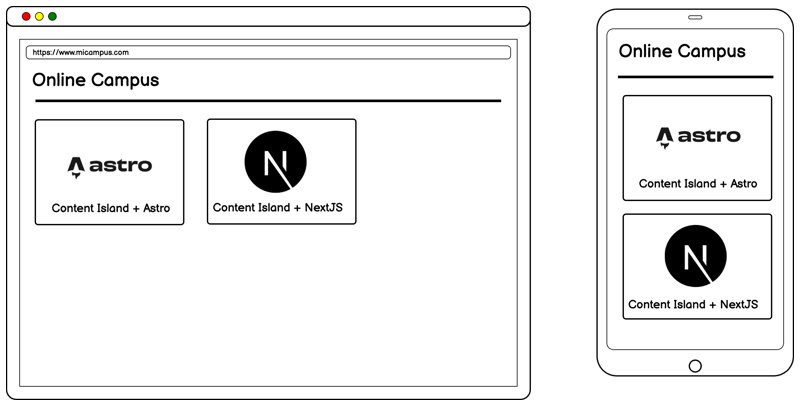
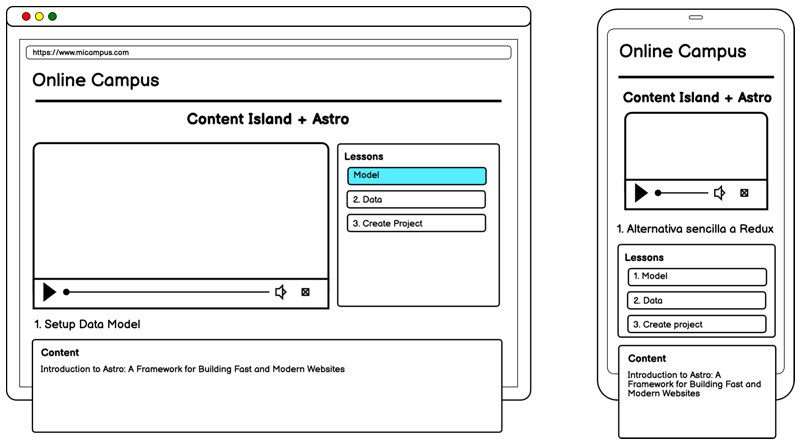
What entities will we need to create?
- An entity for the courses.
- An entity for the course lessons.
What is the situation here? A course will contain one or more lessons.
You can try it live/online here: Open in StackBlitz.
You can also clone the repo with the full demo here: Clone full demo repository
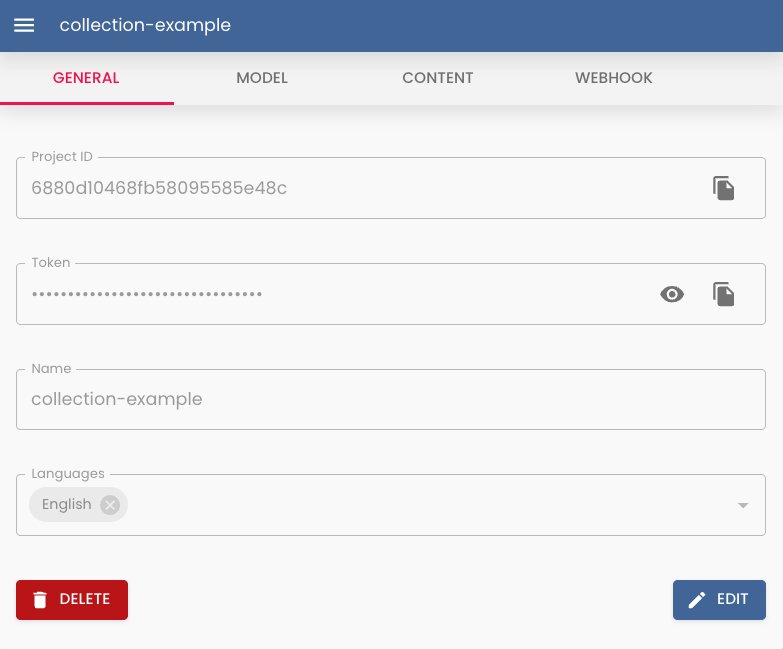
Let’s get to work. I'm going to create a project that will be called:
collection-exampleWe generate an API token.
We choose English as the project language.
And now let’s model this in Content Island.
First, I’ll create the lessons collection. For this, I’ll add the following fields:
title (short text): Lesson title.
slug (short text): The URL segment that will identify the course in a friendly way.
content (long text): The lesson description.
video (short text): YouTube URL of the lesson video (Content Island also allows you to directly upload the video and publish it on a CDN, but for simplicity, we’ve chosen a YouTube video).
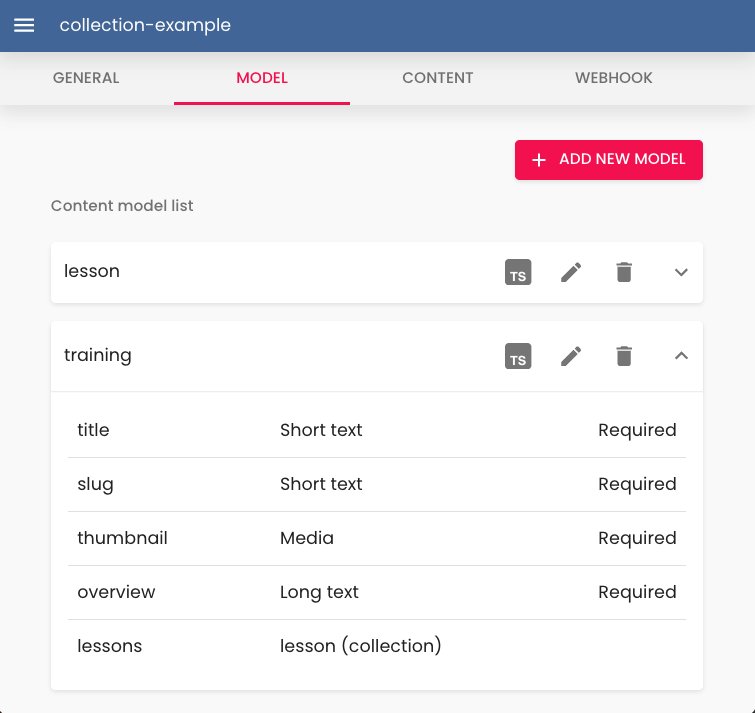
Now I’ll create the course entity (training). For this, I’ll add the following fields:
title (short text): Course title.
slug (short text): The URL segment that will identify the course in a friendly way.
thumbnail (media): Image representing the course.
overview (long text): Course description.
lessons (collection): The lessons that belong to this course <-- be careful, if we set this as required, we must first create the lessons collection.
We now have the data model created. Let's proceed to create a course and some lessons.